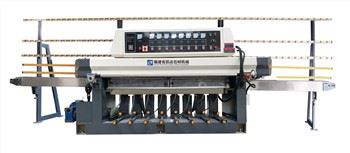
If you’ve ever visited a marble countertop or a decorative stone fireplace, you might not have stopped to think about how that soft, elegant stone made its journey from a quarry to your home. For years, I worked on the quarry floor, operating old, clunky machinery that struggled with soft stones—marble, limestone, and onyx that were too fragile for harsh, aggressive cutting tools. Back then, we lost so much stone to cracks, chips, and uneven cuts, and I often wondered if there was a better way. These days, as a stone mining machine supplier, I get to answer that question every day: modern stone mining equipment is designed specifically to handle soft stones, balancing precision, care, and efficiency to minimize waste and deliver high-quality blocks. Today, I want to walk you through exactly how that works, drawing on my decades of hands-on experience and the technology we provide at our operation.
First, it’s important to define what we mean by “soft stones” in the mining world. Not all soft stones are created equal, and misclassifying them is one of the biggest mistakes new quarry operators make. For context, stone hardness is measured on the Mohs scale, where 1 is talc (extremely soft) and 10 is diamond. Soft stones typically fall between 2 and 5 on this scale: marble is around 3, limestone is 3-4, onyx is 2-3, and travertine is 3-4. The challenge with these stones is that they’re far more prone to structural damage than harder stones like granite (which is 6-7 Mohs). If you use a high-force, high-speed cutting tool meant for granite on marble, you’ll end up with a block that’s split down the middle, has edge cracks, or has an uneven surface that’s useless for fabrication. That’s why the approach to mining soft stones is totally different from what you’d use for hard rock.


Let’s start with the foundation of any soft stone mining operation: choosing the right equipment. When I first started, we used hydraulic jackhammers and heavy chain saws for all stone types, and we destroyed so much marble that our monthly yield was barely 20% of the stone we extracted. Now, the first piece of advice I give quarry owners working with soft stones is to invest in equipment that prioritizes controlled, low-impact cutting over brute force. A lot of new operators ask me about generic quarry machinery, but generic tools just don’t account for the fragility of soft stone. For example, if you look at our Stone Quarry Machine lineup, the models built for soft stones have adjustable tension and speed controls that let you dial in the exact cutting parameters for marble vs. limestone, which you won’t get on a one-size-fits-all machine.
The workhorse of soft stone mining these days is the diamond wire saw, and specifically, the CNC marble granite block diamond wire saw machine. I’ve seen this technology revolutionize the industry, and it’s perfect for soft stones because it uses a thin, diamond-embedded steel wire that moves at a consistent, low speed—usually between 10 and 25 meters per second, compared to 30+ for hard granite mining. The wire itself is only a few millimeters thick, so it creates minimal friction and pressure on the stone as it cuts. When we tested this on a marble quarry a few years back, we cut a 2-meter block of white marble without a single crack along the edge, something we could never do with our old chain saws. The CNC part is key here too: the machine is programmed to follow a precise cutting path, so you don’t have to worry about human error leading to uneven cuts that damage the stone. Unlike manual saws, the CNC wire saw maintains a steady cut depth and pressure, which is critical for soft stones that shift or break under inconsistent force.
Another thing that makes diamond wire saws ideal for soft stones is that they don’t generate the same type of vibration as traditional saws. Vibration is a huge problem with soft stones—it can cause micro-cracks inside the block that you can’t see when you first extract it, but will show up months later when the stone is being fabricated into countertops or tiles. Those micro-cracks lead to waste, delayed projects, and unhappy customers. Our Diamond Wire Saw For Stone Mining is designed with vibration-dampening technology that absorbs the small amount of movement from the wire cutting through soft stone, so you end up with a solid, intact block every time. I remember one quarry owner told me that since he switched to our diamond wire saws for his onyx mining, his waste rate dropped by 40%—that’s a game-changer for profitability in a tight market.
Even with the right saw, how you actually operate the machine makes a huge difference when handling soft stones. It’s not just about the equipment—it’s about the process. The first step in any soft stone mining operation is creating a “slot” where the saw can enter the stone. For hard stones, you might use a heavy jackhammer to drill a wide slot, but for soft stones, that drilling can cause immediate cracks. Instead, we recommend using a small, low-impact rotary drill to make narrow entry holes, spaced only a few inches apart. That lets the diamond wire feed through without putting pressure on the surrounding stone. Once the wire is in place, you start the cut at the slowest possible speed, gradually increasing it as the cut progresses. If you start too fast, the friction from the wire will generate heat that softens the stone and causes it to break apart, or even melt parts of the wire. For marble, we usually start at 10 meters per second, and bump it up to 15 after the first half of the cut. For even softer stones like onyx, we keep it at 10 the entire time, because onyx is so fragile that even a small speed increase can damage it.
Water is another critical factor when handling soft stones. A lot of new quarry operators skip or skimp on water for cutting, thinking it slows down the process, but for soft stones, water is non-negotiable. The diamond wire creates friction as it cuts, and that friction generates heat. If you don’t cool the wire and the stone, the heat will weaken the soft stone’s structure, leading to cracks and uneven cuts. The water also flushes away the stone dust, which keeps the cutting path clear and lets the wire move smoothly. For our Granite Wire Saw Cutting, we have integrated water cooling systems that are adjustable—you can control the flow rate depending on the stone type. For soft stones, we recommend a higher flow rate (around 10 liters per minute) to keep the stone consistently cool, whereas for hard granite, you can use half that. It’s a small adjustment, but it makes a massive difference in the quality of the final block.
Another technique we use for soft stones is “pre-splitting” before full cutting. Pre-splitting involves drilling a series of small, evenly spaced holes along the planned cut line, then inserting thin steel wedges and gently tapping them to create small cracks along the line. This breaks the stone into a rough block shape before the diamond saw does the final cut, which reduces the amount of force the saw has to apply. For soft stones like limestone, pre-splitting cuts down on cutting time by almost 20%, and it minimizes the risk of the stone splitting unexpectedly during the saw cut. You have to be careful with pre-splitting, though—too much force on the wedges can cause large cracks that ruin the block, so it’s a technique that takes some training to master.
I’ve seen a lot of quarry operators make the mistake of using the same settings for soft stones as they do for hard stones, and it always leads to disappointment. A few years ago, we worked with a small quarry in Vermont that specialized in marble. They’d been using a standard granite wire saw for years, and their yield was only around 30%—they were throwing away most of the marble blocks because of cracks and uneven cuts. They switched to our CNC marble granite block diamond wire saw machine, adjusted the speed and water flow for soft stone, and their yield jumped to 75% in the first year. That’s not just better quality—it’s more money in their pockets, which is what this business is all about.
Now, you might be wondering: what about other types of stone mining equipment for soft stones? The diamond wire saw is the primary tool, but there are other pieces that complement it. Our Stone Quarry Machine line includes specialized transport systems for soft stone blocks. Soft stone is much lighter than granite, but it’s also more prone to damage from impact during transport. We have block cradles that are padded and designed to hold soft stone blocks securely, so they don’t bump into each other or the sides of the truck on the way to fabrication facilities. We also have cranes with adjustable lifting slings that distribute weight evenly across the block, instead of putting pressure on one edge which can cause cracks.
When it comes to choosing the best equipment for soft stones, it’s important to prioritize tools that are built with flexibility in mind. That’s why our Best Quarry Machine models for soft stone operators aren’t the most expensive or powerful ones—they’re the ones that let you adjust speed, tension, and cooling to match the specific stone you’re working with. Hard granite needs a high-force, high-speed saw, but marble needs a tool that’s gentle, precise, and customizable.
One common misconception is that soft stone mining is less profitable than hard stone mining, but that’s not true when you use the right technology and techniques. Soft stones like marble and onyx command premium prices in the construction and design industries—high-quality white marble can sell for twice as much as some types of granite. The key is to extract those soft stones without damaging them, which is exactly what modern stone mining equipment is designed to do. When I first started in this business, we thought of soft stones as a headache, but now I see them as a huge opportunity for quarry operators who invest in the right tools.
If you’re a quarry owner working with soft stones and dealing with high waste rates or poor quality blocks, I encourage you to look at equipment that’s specifically tailored to your needs. Generic machinery might be cheaper upfront, but the long-term cost of wasted stone will far outweigh the savings. The diamond wire saw, in particular, has transformed soft stone mining over the last decade, and it’s worth investing in if you want to improve your yield and the quality of your product.
Whether you’re new to the stone mining industry or looking to upgrade your existing equipment, taking the time to learn how to handle soft stones properly makes all the difference. It’s not just about using the right machine—it’s about understanding the unique properties of each stone, adjusting your techniques accordingly, and investing in technology that prioritizes precision over brute force. After decades in this business, I’ve seen firsthand that when you treat soft stones with the care they deserve, you end up with a better product, less waste, and a more profitable operation.
If you’re ready to explore equipment designed specifically for soft stone mining, or have questions about optimizing your current process, we can help you find the right solution for your quarry needs.
References:
- Stone Industry Machinery and Technology, International Stone Magazine, 2022
- Soft Stone Mining Best Practices, Quarry Operations Journal, 2023
- Diamond Wire Saw Applications in Marble Quarries, Global Stone Processing Report, 2021
- Mohs Hardness Scale for Stone Classification, Geological Society of America, 2020