The Growing Demand for Automation in the Stone Industry
The stone processing industry has always relied heavily on skilled operators and traditional fabrication methods. However, with increasing demand for customized stone products, larger project requirements, and higher expectations for processing accuracy, traditional production methods are facing new challenges.
Modern stone factories are now turning to automation technologies to improve productivity, reduce material waste, and achieve more consistent processing results. From automatic stone cutting systems to intelligent control solutions, advanced machinery is transforming the way granite, marble, and other natural stones are processed.
For manufacturers looking to remain competitive in the global market, investing in reliable stone processing equipment has become an important step toward improving overall production efficiency.
How Automation Changes Stone Cutting Operations
Automation brings significant improvements to different stages of stone fabrication, especially in cutting, positioning, and production management.
1. Higher Cutting Precision and Consistent Quality
Stone is a natural material with different hardness levels, textures, and structures. Manual operation may lead to variations in cutting accuracy, especially when processing large slabs or valuable stone blocks.
Automated stone cutting machines use advanced control systems and precision mechanical structures to ensure stable cutting performance. Equipment such as bridge cutting machines and block cutting machines can maintain accurate cutting dimensions while reducing human operation errors.
This is particularly important for high-value materials such as granite, marble, and large-format stone slabs, where every millimeter affects the final product quality.
2. Improved Production Efficiency
For modern stone factories, production capacity is a key factor in market competition.
Automation allows machines to complete repeated cutting tasks with higher speed and stability. A professional stone cutting system can process multiple pieces continuously, helping factories increase daily output while maintaining consistent quality.
For example, hydraulic block cutting machines are designed for efficient processing of large stone blocks into slabs, making them suitable for factories handling high-volume granite and marble production.
3. Reduced Material Waste
Stone materials are valuable resources, and reducing waste directly improves factory profitability.
Automated cutting equipment can optimize cutting paths and provide more accurate positioning, helping manufacturers maximize material utilization. Precise cutting also reduces unnecessary reprocessing caused by dimensional errors.
For stone companies processing expensive marble, quartzite, or large-size granite blocks, improving material efficiency can create significant economic benefits.

Key Automated Machines Used in Stone Processing
Different production requirements require different types of stone machinery. Common automated solutions include:
Bridge Cutting Machines
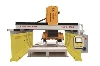
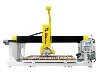
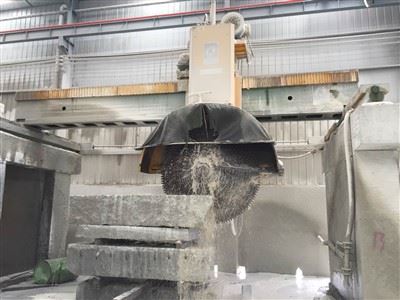
Bridge cutting machines are widely used for slab cutting, edge processing, and customized stone fabrication. Equipped with precise control systems, these machines can perform accurate straight cutting operations for marble, granite, and other stone materials.
They are commonly used in stone workshops, countertop factories, and construction material processing facilities.
Block Cutting Machines
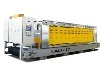
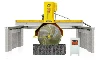
Block cutting machines are designed for primary stone processing. They cut large stone blocks into slabs with stable performance and high efficiency.
For large-scale granite and marble production, hydraulic block cutters provide powerful cutting force and reliable operation.
Profile Cutting Machines
Profile cutting machines are used for producing special shapes and customized stone components, including curves, decorative edges, and architectural stone elements.
Automation technology allows these machines to complete complex designs with improved accuracy and repeatability.

The Role of Intelligent Manufacturing in Future Stone Factories
The future development of the stone industry is closely connected with intelligent manufacturing. More factories are adopting digital production management, automated machinery, and remote technical support to improve operational efficiency.
Advanced stone machinery manufacturers are also focusing on developing equipment with better control systems, easier operation, and improved energy efficiency.
With more than 20 years of experience in stone cutting machinery manufacturing, KAIDA STONE MACHINERY continues to develop reliable solutions including bridge cutting machines, block cutting machines, profile cutting machines, and sewage processing equipment to support stone factories worldwide.

Choosing the Right Automation Solution for Your Stone Factory
When selecting automated stone processing equipment, manufacturers should consider several factors:
- Type of stone materials being processed
- Required production capacity
- Cutting size and accuracy requirements
- Available factory space
- Maintenance and technical support needs
A suitable automation solution should not only improve production speed but also provide long-term reliability and operational value.
Professional machinery suppliers can evaluate factory requirements and provide customized equipment solutions based on production conditions.

Conclusion
Automation is becoming an essential trend in the global stone processing industry. By adopting advanced stone cutting machinery, factories can achieve higher accuracy, improved productivity, and better resource utilization.
As competition in the international stone market continues to increase, automated stone processing equipment will play an increasingly important role in helping manufacturers build more efficient and competitive production systems.
For stone companies seeking to upgrade their production capabilities, investing in reliable automation technology is a practical path toward future growth.