Choosing a stone cutting machine is an important investment for any stone processing factory. The right equipment can improve production efficiency, maintain cutting accuracy, and reduce unnecessary operating costs. However, the best machine is not necessarily the largest or most powerful model.
Different factories have different materials, production volumes, product specifications, and workshop conditions. A practical machine selection should therefore start with the actual production requirements.
Start With the Type of Stone You Process
The first consideration is the type of stone being cut.
Granite, marble, and other natural stones can have different hardness, structures, and cutting characteristics. A machine used mainly for large granite blocks may have different requirements from equipment used for marble slabs or customized stone products.
Before contacting a machinery supplier, it is useful to identify:
- Main stone materials
- Typical block or slab dimensions
- Maximum material size
- Required cutting thickness
- Daily or monthly production volume
- Main finished products
Having this information makes it easier to determine which machine configuration is appropriate.

Bridge Cutting Machine or Block Cutting Machine?
Stone cutting machines are designed for different stages of processing, so identifying the production task is essential.
Bridge Cutting Machines
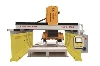
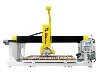
Bridge cutting machines are generally used for processing stone slabs and producing accurately sized pieces. They can be suitable for applications such as countertop fabrication, construction stone, and customized stone components.
When selecting a bridge cutting machine, buyers should pay attention to cutting dimensions, machine structure, control system, spindle performance, and positioning accuracy.
Block Cutting Machines
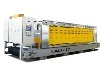
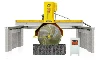
Block cutting machines are designed for cutting large stone blocks into slabs or other required sizes.
For factories working with large granite or marble blocks, block cutting equipment needs sufficient structural strength and cutting capacity to handle continuous production.
KAIDA STONE MACHINERY provides both bridge cutting machines and block cutting machines for different stone processing requirements.

Production Capacity Should Match Your Actual Demand
Higher production capacity does not automatically mean a better investment.
If a machine is significantly larger than the factory's actual production requirements, the additional investment may not provide a corresponding return. On the other hand, equipment with insufficient capacity can create bottlenecks when order volumes increase.
A better approach is to estimate the required production capacity based on current orders and expected future demand.
Consider:
Daily Production Requirement → Cutting Capacity → Machine Configuration
For factories planning long-term expansion, it can also be useful to leave some capacity for future production growth.

Cutting Size and Machine Working Range
The maximum size of the stone products is another critical specification.
A factory producing large-format slabs or oversized architectural components needs equipment with a suitable working range. The machine should accommodate the dimensions of the material without requiring excessive repositioning.
When comparing different machines, buyers should check the actual cutting range rather than evaluating the machine only by its overall dimensions.
Important specifications may include:
- Maximum cutting length
- Maximum cutting width
- Maximum cutting depth
- Blade diameter range
- Material thickness
- Table or working-area dimensions
These specifications should correspond to the actual materials and products handled by the factory.

Consider the Factory Layout Before Purchasing
Machine selection should also take the available workshop space into account.
A stone cutting machine requires more than its own footprint. Space may also be needed for material loading, unloading, operator access, maintenance, water management, and movement of stone blocks or slabs.
For large industrial projects, equipment suppliers may evaluate the customer's space and operator requirements before preparing a system proposal. KAIDA's engineering department provides customized system proposals and CAD-based layouts according to project requirements.
A suitable layout can make material handling more efficient and provide better access for machine maintenance.

Machine Structure and Long-Term Stability
Stone cutting is a demanding industrial process. Large stone blocks and slabs can place considerable mechanical loads on the equipment.
Machine structure and mechanical stability therefore have a direct influence on long-term performance.
When evaluating a machine, buyers should look beyond appearance and marketing specifications. The quality of the machine structure, transmission components, guide systems, hydraulic systems, and control components should all be considered.
For factories operating equipment for many hours each day, stable operation is often more valuable than simply achieving the highest possible cutting speed.
Ease of Operation and Maintenance
A machine may have advanced functions, but complicated operation can create difficulties for production teams.
A practical stone cutting machine should provide an operating system that workers can understand and use efficiently. Training and maintenance support are also important considerations when purchasing equipment from an overseas supplier.
KAIDA provides training related to machine programming, correct operation, and maintenance, while its remote assistance service can help specialized personnel identify and address potential problems.
For international buyers, this type of technical support can be especially important because the machinery supplier and end user may be located in different countries.
Evaluate the Complete Investment, Not Just the Machine Price
The purchase price is only one part of the total cost of owning a stone cutting machine.
A more complete evaluation should include:
Equipment Cost + Installation + Consumables + Energy + Labor + Maintenance + Downtime
A machine with a lower initial price may become more expensive over its service life if it requires frequent maintenance or produces inconsistent results.
Buyers should therefore compare equipment based on expected long-term operating costs and production value.
Supplier Experience and After-Sales Support Matter
Stone processing machinery is specialized equipment. The supplier's experience can have an important influence on installation, commissioning, training, maintenance, and technical support.
For international customers, it is worth checking:
- Manufacturer experience
- Product range
- Engineering capabilities
- Technical documentation
- Training services
- Remote technical assistance
- Spare parts support
- International service network
KAIDA STONE MACHINERY has focused on stone cutting machinery for more than 20 years and supplies bridge cutting machines, block cutting machines, profile cutting machines, and sewage processing equipment to customers in domestic and overseas markets.

Build the Machine Selection Around Your Production Process
The best stone cutting machine is the one that fits the complete production process.
Instead of asking only, "Which machine has the highest capacity?", buyers should consider how the equipment will work with existing material handling, cutting, finishing, and production procedures.
A well-planned equipment selection can help improve:
- Production efficiency
- Cutting consistency
- Material utilization
- Labor efficiency
- Equipment availability
- Long-term operating costs
For this reason, machine selection should be treated as part of factory planning rather than simply an equipment purchase.
Final Considerations
Choosing stone cutting equipment requires a balance between production requirements, machine specifications, factory conditions, investment budget, and long-term service.
By clearly defining the materials, product dimensions, production capacity, workshop layout, and technical requirements before purchasing, stone manufacturers can make a more informed equipment decision.
For factories planning a new production line or upgrading existing stone processing equipment, working with an experienced machinery manufacturer can help turn specific production requirements into a practical equipment solution.