As modern architecture continues to evolve, large-format stone slabs are becoming one of the fastest-growing trends in residential and commercial construction. Designers and builders increasingly favor oversized marble, granite, quartzite, and engineered stone slabs for their ability to create seamless surfaces and luxurious visual effects.
This growing demand is creating new opportunities for stone fabricators while also increasing the need for more advanced processing equipment capable of handling larger and heavier materials with precision.
Why Large Slabs Are Becoming More Popular
Large-format stone slabs offer several advantages over traditional tile and small slab applications.
Fewer joints create a cleaner appearance, while larger surfaces allow the natural beauty of the stone to remain uninterrupted. As a result, architects are specifying large slabs for an increasing number of projects worldwide.
Popular applications include:
- Kitchen countertops and islands
- Bathroom vanity tops
- Feature walls
- Luxury flooring
- Hotel lobbies
- Commercial reception areas
The trend is especially strong in North America, Europe, and the Middle East, where premium interior design continues to drive demand for natural stone products.
New Challenges for Stone Fabricators
While large-format slabs offer design advantages, they also introduce new manufacturing challenges.
The increased dimensions and weight of modern slabs require greater cutting precision and more reliable handling systems. Fabricators must carefully balance productivity, material utilization, and product quality throughout the production process.
Common challenges include:
- Slab breakage during handling
- Material waste from inaccurate cutting
- Production bottlenecks
- Higher labor requirements
- Increased transportation risks
To remain competitive, many processing facilities are upgrading their machinery to accommodate larger stone formats.
Advanced Machinery Is Becoming Essential
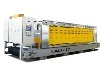
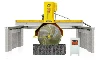
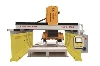
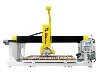
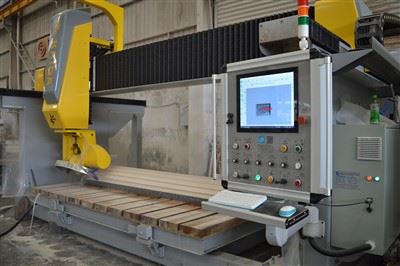
Modern bridge cutting machines and CNC stone processing centers have become essential tools for large slab fabrication.
Compared with traditional cutting methods, advanced equipment provides:
- Higher cutting accuracy
- Faster processing speeds
- Reduced labor dependence
- Better material utilization
- Greater production flexibility
Automatic positioning systems, digital control technology, and multi-axis machining capabilities help manufacturers improve efficiency while maintaining consistent quality.
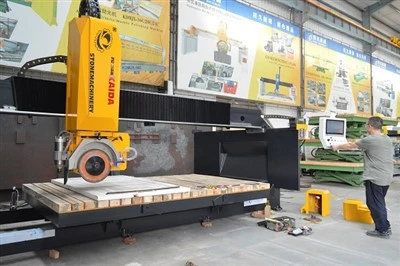
At KAIDA STONE MACHINERY, continuous investment in research and development has enabled the company to provide advanced bridge cutting machines and CNC solutions designed specifically for modern stone processing requirements.
Automation Improves Productivity
-
Labor shortages and rising production costs are encouraging more factories to adopt automation technologies.
Intelligent cutting systems can automatically optimize cutting paths, reduce operator intervention, and improve repeatability across production batches.
For facilities processing large quantities of marble, granite, and quartz slabs, automation can significantly increase throughput while reducing operating costs.
Combined with remote technical support and modern control systems, automated equipment helps manufacturers maintain stable production even under demanding workloads.
-
Looking Ahead
Industry analysts expect demand for large-format stone products to continue growing over the coming years.
As construction projects increasingly emphasize premium finishes and customized designs, stone fabricators will require more sophisticated equipment capable of delivering precision, efficiency, and reliability.
With more than 20 years of experience in stone machinery manufacturing, KAIDA STONE MACHINERY remains committed to helping customers worldwide adapt to changing market demands through innovative bridge cutting machines, CNC stone processing solutions, and professional technical support.
The future of stone fabrication will be shaped by larger materials, smarter production processes, and increasingly advanced machinery-and companies that invest in modern equipment today will be better positioned to compete tomorrow.