Choosing the right stone cutting machine is an important decision for any stone processing factory. The right machine depends not only on the type of stone you process, but also on the size of the raw material, the finished products you want to make, the cutting shapes required, and the level of processing you need.

A machine that works well for a block processing plant may not be the right choice for a countertop workshop. Similarly, a standard bridge cutting machine may be suitable for straight cutting, while a more advanced CNC stone cutting machine may be more suitable for complex contours, sink openings, mitering, milling, drilling, grooving, or customized stone shapes.
This guide explains the main types of stone cutting machines, what they are used for, and how to match a machine with your actual production requirements.
What Is a Stone Cutting Machine?
A stone cutting machine is equipment designed to cut and process stone materials into the required dimensions and shapes. Depending on the machine type, stone cutting can range from large-block processing and straight slab cutting to CNC contour cutting, mitering, milling, drilling, grooving, and customized shaping.
In a stone processing factory, the machine should be selected according to the actual production workflow. Instead of asking only which machine has the largest motor or blade, buyers should first determine what raw material they have and what finished products they need to produce.
A practical starting point: define the material, raw size, finished product, required cutting shape, and planned production volume before comparing specific machine models.
What Type of Stone Processing Business Do You Have?
Before choosing a stone cutting machine, it is useful to start from the products you plan to make. Different production requirements lead to different machine configurations.
1. You process large stone blocks
A block cutting machine is generally the starting point for converting large stone blocks into slabs or other required dimensions.
2. You mainly process stone slabs
A bridge cutting machine can be suitable when your main requirement is straight cutting and cut-to-size slab processing.
3. You produce countertops and customized stone products
CNC stone cutting machines are more suitable when your products require customized contours, sink openings, mitering, milling, drilling, grooving, or other processing functions.
4. You need cutting plus milling
A 4+1 axis stone cutting machine combines three linear axes with one rotary axis and an additional milling cutter function.
5. You need complex contours or artistic engraving
A 5-axis stone cutting machine is designed for more complex processing requirements, including special-shaped stone, customized contours, and 2D/3D pattern and text engraving.
Main Types of Stone Cutting Machines
There is no single stone cutting machine that is suitable for every stone processing application. Machine configurations vary according to the material, product dimensions, cutting requirements, and processing functions.
3-Axis Stone Cutting Machines
3-axis systems can be considered a basic configuration in the stone processing industry. The three linear axes are generally used as a reference point when comparing more advanced multi-axis processing systems.
However, when a factory needs more complex contours, additional rotary movement, milling, or advanced customized processing, buyers may need to consider a 4+1 axis or 5-axis configuration instead.
Block Cutting Machines
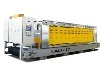
KAIDA's QSDQ series is a multi-blade saw designed for cutting large-size stone blocks.
For this type of application, the machine should be selected according to the size of the raw block and the finished dimensions required by the factory. Planned output can also be considered when developing the processing solution.
QSDQ Block Cutting Solution
- Raw stone block dimensions
- Required finished processing dimensions
- Planned production output
Based on these requirements, KAIDA can develop a customized processing solution for the customer's stone block production.

Bridge Cutting Machines
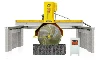
Bridge cutting machines are mainly used for straight cutting and cut-to-size processing of stone slabs. They are commonly considered when the production requirement is focused on cutting slabs into specific finished dimensions.
Depending on the customer's requirements, 45° cutting can also be considered. If 45° processing is not required, the machine configuration can remain more economical by avoiding an unnecessary function.
KAIDA bridge cutting machine models include SZQJ-400, SZQJ-600, SZQJ-700 and SZQJ-800.

CNC Stone Cutting Machines
CNC stone cutting machines are designed for computer numerical controlled cutting, shaping, and engraving of hard stone materials such as marble, granite, quartz stone, and sintered stone.
They are particularly useful when the factory needs to move beyond simple straight cutting and produce customized stone components.
Kitchen countertops, washbasin and sink openings, and customized countertop shapes.
Triangular, circular, elliptical, and other customized geometric contours.
Straight-line cutting, curved shaping, maximum 45° edge mitering or cutting, chamfering, edge trimming, and related processing.
Milling, drilling, grooving, and circular cut-outs.
Tombstones, reliefs, 3D sculptures, architectural walls, and other customized stone components.

4+1 Axis Stone Cutting Machines
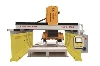
A 4+1 axis configuration includes three linear axes X/Y/Z, one rotary axis, and an additional milling cutter function.
This configuration can be considered for conventional cutting, fixed-angle processing, and simpler customized countertop processing where the factory needs cutting together with milling.
KAIDA 4+1 axis models include CNC-400 and CNC-600.
5-Axis Stone Cutting Machines
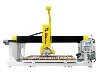
A 5-axis stone cutting machine combines three linear axes X/Y/Z with two fully linked rotary axes. This makes it suitable for more complex stone processing requirements than conventional cutting.
KAIDA's CNC-450 and CNC-600 are 5-axis stone cutting machines with the same main processing functions. The main difference between the two models is the maximum saw blade diameter and the corresponding cutting thickness and processing range.
5-Axis Processing Functions
• Ellipse cutting
• Arc cutting
• Complex contour cutting
• Customized countertop processing
• Sink openings
• Edge processing
• 45° mitering
• Chamfering
• Milling
• Edge trimming
• Drilling
• Grooving
• Circular cut-outs
• Shallow relief processing
• Complex artistic shaping

2D and 3D Pattern and Text Engraving
When a stone processing project requires more than cutting, the processing capability of the machine becomes especially important.
KAIDA's 5-axis stone cutting machines can be used for 2D and 3D pattern and text engraving with saw blades and milling cutters. Applications include tombstones, reliefs, 3D sculptures, architectural walls, and customized artistic stone work.
For buyers, this means that machine selection should consider not only the basic cutting requirement but also whether future orders may involve customized patterns, text, reliefs, or complex artistic shaping.

4+1 Axis vs 5-Axis Stone Cutting Machine
One of the most important decisions for buyers considering a CNC stone cutting machine is whether a 4+1 axis or 5-axis configuration better matches the production requirement.
| Item | 4+1 Axis | 5-Axis |
|---|---|---|
| Basic configuration | 3 linear axes + 1 rotary axis + milling function | 3 linear axes + 2 fully linked rotary axes |
| Typical requirement | Conventional cutting and fixed-angle processing | Complex and customized processing |
| Countertop processing | Suitable for simpler countertop processing | Suitable for more complex customized countertops |
| Complex contours | More limited | Suitable |
| 2D/3D pattern and text engraving | Not the main configuration for this requirement | Suitable |
| KAIDA models | CNC-400 / CNC-600 | CNC-450 / CNC-600 |
CNC-450 vs CNC-600: Which 5-Axis Machine Do You Need?
CNC-450 and CNC-600 share the same main 5-axis processing functions. The main difference is the maximum saw blade diameter and the corresponding cutting thickness and processing range.
| Specification | CNC-450 | CNC-600 |
|---|---|---|
| X Axis Stroke | 3200 mm | 3400 mm |
| Y Axis Stroke | 2000 mm | 2200 mm |
| Z Axis Stroke | 400 mm | 500 mm |
| A Axis | 0–90° automatic | 0–90° automatic |
| C Axis | ±361° | ±361° |
| Cutting Thickness | 0–80 mm | 0–180 mm |
| Fast Running Speed | 25 m/min | 25 m/min |
| Spindle Power | 15 kW | 15–22 kW optional |
| Spindle Speed | 0–4000 rpm | 0–4000 rpm |
| Saw Blade Diameter | 350–450 mm | 350–600 mm |
| Platform Size | 3200 × 2000 mm | 3200 × 2000 mm |
| Tilt Degree | 0–85° | 0–85° |
| Total Power | ≈23 kW | ≈33 kW |
| Total Weight | ≈6000 kg | ≈7000 kg |
| Equipment Dimensions | 6000 × 3300 × 4400 mm | 6000 × 3300 × 5000 mm |
| Camera Function | Yes | Yes |
| Blade Measurement | Yes | Yes |
| Suction Cup | Optional | Yes |
| Milling Cutter Function | Yes | Yes |
Which one should you choose?
If your slabs are not very thick, CNC-450 can be considered. If your application involves thicker slabs, CNC-600 provides a larger cutting range, with cutting thickness up to 180 mm.
What Materials Can a Stone Cutting Machine Process?
Material selection is another important part of machine selection. Different stone materials can have different processing characteristics, so buyers should always match the machine configuration with the materials they actually plan to process.
Common Stone Processing Applications
The right stone cutting machine should be selected according to the finished product. Common applications covered by KAIDA equipment include the following.
Stone Slabs and Cut-to-Size Products
Bridge cutting machines can be used for straight cutting and cut-to-size slab processing, while block cutting machines are used earlier in the workflow to process large stone blocks.
Kitchen Countertops and Sink Openings
CNC stone cutting machines are suitable for customized countertop processing, including sink openings, irregular contours, circular and elliptical shapes, edge processing, and 45° mitering.
Architectural Stone Components
CNC equipment can be used for customized architectural stone components such as inlay work, Roman columns, irregular profiles, and other stone elements.
Artistic Stone Processing
5-axis machines can be used for 2D/3D pattern and text engraving, shallow relief processing, complex artistic shaping, tombstones, reliefs, 3D sculptures, and architectural walls.

Stone Polishing After Cutting
Cutting is only one part of a stone processing workflow. When the production process also requires slab grinding and polishing, a polishing machine may be needed after cutting.
KAIDA slab polishing machine models include KDMJX1200-6C, KDMJX1200-8C, KDMJX1200-12C, KDMJX1200-16C, KDMJX1200-20C, KDMJX1200-24C, KDMJX2100-16C, KDMJX1600-16C and others.
Confirmed materials for KAIDA polishing applications include granite, marble, limestone, quartz stone, and microcrystalline stone. Different stone types require different abrasives.

CNC Waterjet for Complex Stone Cutting
When a stone project requires complex decorative cutting or inlay work, a CNC waterjet can provide another processing solution.
KAIDA's YL4020 CNC waterjet is a high-end industrial machine using ultra-high-pressure water mixed with abrasive to cut hard stone materials.
Typical Applications
- Customized countertop processing
- Sink holes and rounded corners
- Customized edges
- Marble inlay
- Floor mosaics and patterns
- Wall artistic backgrounds
- Irregular stone furniture
- Architectural decorative elements
- Roman columns and irregular profiles
Confirmed YL4020 application materials include granite, marble, limestone, quartz stone, and microcrystalline stone. Different stone varieties require different abrasives.

How to Choose the Right Stone Cutting Machine for Your Factory
Once you understand the different machine types, the next step is to match the machine with your actual factory requirements. The following questions can help narrow down the right configuration.
1. What Raw Material Are You Processing?
Start with the stone type. Confirm whether you mainly process granite, marble, quartz stone, sintered stone, luxury stone, engineered/artificial stone, microcrystalline stone, or another material suitable for the selected machine.
2. What Is the Size of Your Raw Material?
For block cutting, provide the dimensions of the raw blocks. For slab processing, provide the maximum slab dimensions and thickness. This information is especially important when selecting the appropriate cutting range.
3. What Finished Products Do You Need?
A factory producing standard cut-to-size slabs has different requirements from a factory producing kitchen countertops, customized furniture, architectural components, or artistic stone products.
4. Do You Need Straight Cutting or Complex Shapes?
Straight cutting requirements may lead to a bridge cutting solution. If the project requires elliptical shapes, arcs, complex contours, sink openings, mitering, milling, drilling, or grooving, a CNC configuration may be more appropriate.
5. Do You Need Milling?
If milling is part of your production requirement, consider a configuration that includes the milling cutter function. KAIDA's 4+1 and 5-axis machines both include a milling cutter function.
6. Do You Need 2D/3D Pattern or Text Engraving?
If the factory plans to process 2D/3D patterns, text, reliefs, or complex artistic stone shapes, a 5-axis stone cutting machine should be considered.
7. What Is Your Required Cutting Thickness?
Cutting thickness is particularly important when comparing CNC-450 and CNC-600. CNC-450 has a cutting thickness of 0–80 mm, while CNC-600 has a cutting thickness of 0–180 mm.
8. What Production Output Do You Need?
For block processing projects, planned output is one of the important pieces of information that can be provided to the machine supplier when developing a processing solution.
A Simple Stone Processing Machine Selection Workflow
What Information Should You Send to a Stone Cutting Machine Supplier?
A supplier can recommend a more suitable machine when the buyer provides clear information about the actual processing requirements. Instead of asking only for a machine price, prepare the following information.
- Stone material: What type of stone do you process?
- Raw block size: What are the maximum dimensions of the blocks?
- Slab size: What are the maximum length and width of your slabs?
- Thickness: What thickness do you need to cut?
- Finished product: What products do you plan to manufacture?
- Cutting shape: Do you mainly need straight cutting or complex contours?
- Additional processing: Do you need mitering, milling, drilling, grooving, edge processing, or engraving?
- Production requirement: What output do you plan to achieve?
Stone Cutting Machine Price: What Should Buyers Consider?
The price of a stone cutting machine should not be considered separately from the machine's intended application. Different machine types and configurations are designed for different processing requirements.
A buyer comparing prices should first compare whether the machines provide the functions required for the planned products. For example, a simple straight-cutting requirement does not necessarily require the same configuration as complex countertop processing or 2D/3D stone engraving.
Before comparing quotations, make sure the quotations are based on comparable specifications. Check the machine model, cutting range, blade diameter, processing functions, and other configuration requirements that are important for your application.
KAIDA Stone Processing Machine Solutions
KAIDA provides different types of stone processing equipment for different stages and applications of stone processing.
| Machine Type | KAIDA Models |
|---|---|
| Block Cutting Machine | QSDQ-1800 / QSDQ-2000 / QSDQ-2200 / QSDQ-2500 / QSDQ-2800 / QSDQ-3200 / QSDQ-3600 etc. |
| Bridge Cutting Machine | SZQJ-400 / SZQJ-600 / SZQJ-700 / SZQJ-800 etc. |
| 4+1 Axis Stone Cutting Machine | CNC-400 / CNC-600 |
| 5-Axis Stone Cutting Machine | CNC-450 / CNC-600 |
| Slab Polishing Machine | KDMJX1200-6C / 8C / 12C / 16C / 20C / 24C / KDMJX2100-16C / KDMJX1600-16C etc. |
| CNC Waterjet | YL4020 |
Frequently Asked Questions About Stone Cutting Machines
What is the best stone cutting machine for a stone factory?
There is no single machine that is best for every factory. The right choice depends on the raw material, block or slab size, finished product, cutting shape, required thickness, processing functions, and production requirements.
What is the difference between a block cutting machine and a bridge cutting machine?
A block cutting machine is used to process large stone blocks, while a bridge cutting machine is mainly used for straight cutting and cut-to-size processing of stone slabs.
What is the difference between a 4+1 axis and a 5-axis stone cutting machine?
A 4+1 axis system includes three linear axes, one rotary axis, and an additional milling cutter function. A 5-axis system includes three linear axes and two fully linked rotary axes and is more suitable for complex contours and customized processing.
Which is better, CNC-450 or CNC-600?
Both are KAIDA 5-axis stone cutting machines with the same main processing functions. CNC-450 has a cutting thickness of 0–80 mm, while CNC-600 has a cutting thickness of 0–180 mm and a larger saw blade range. CNC-450 can be considered for thinner slabs, while CNC-600 is suitable for thicker slab processing.
Can a 5-axis stone cutting machine engrave patterns and text?
Yes. KAIDA's 5-axis stone cutting machines can be used for 2D and 3D pattern and text engraving with saw blades and milling cutters.
What information should I provide when asking for a stone cutting machine quotation?
Provide the stone material, raw block or slab dimensions, required thickness, finished product dimensions, required cutting shapes, additional processing functions, and planned production output. These details help the supplier recommend a suitable machine configuration.
Stone Cutting Machine Selection Checklist
☐ Stone material confirmed
☐ Raw block or slab dimensions confirmed
☐ Required cutting thickness confirmed
☐ Finished product dimensions confirmed
☐ Straight or complex cutting requirement confirmed
☐ Mitering requirement confirmed
☐ Milling requirement confirmed
☐ Drilling / grooving / edge processing requirements confirmed
☐ 2D/3D pattern or text engraving requirement confirmed
☐ Planned production output confirmed
Looking for the Right Stone Cutting Machine?
Send us your stone material, raw material dimensions, finished product requirements, cutting thickness, required processing functions, and planned production output. KAIDA can recommend a suitable stone processing solution based on your requirements.
Email: technic@kaida888.cn
WhatsApp / Mobile / WeChat: +86 15960555832