In the realm of stone processing, the ability to shape materials precisely is paramount. One common question that often arises among artisans, contractors, and industry enthusiasts is whether a block cutting machine can cut curved blocks. As a seasoned block cutting machine supplier, I am here to delve into this topic with a mix of technical knowledge and practical experience.
Understanding Block Cutting Machines
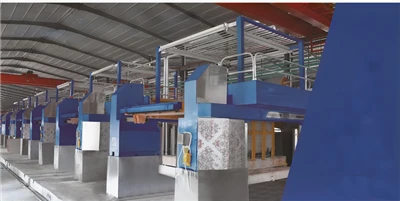
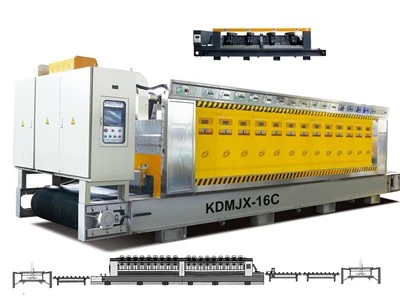
Before we address the question of cutting curved blocks, it's essential to understand the nature of block cutting machines. These machines come in various types, each designed for specific functions and materials. For instance, we offer a range of advanced machines like the Diamond Marble Gang Saw Machine, which is highly efficient for cutting marble blocks. This machine uses a series of diamond - tipped blades to make multiple cuts simultaneously, ensuring high - speed and accurate cutting of large marble blocks.
Another popular option is the Multiblade Granite stone Block Cutter. As the name suggests, it is tailored for granite blocks. The multi - blade design enables it to handle the hardness of granite, making it a reliable choice for granite processing facilities.
The Block Cutter For Granite is also a specialized tool. It is engineered to cut granite blocks with precision, providing clean and smooth cuts. It is often used in applications where high - quality finish is required, such as in the production of granite countertops or large - scale architectural features.
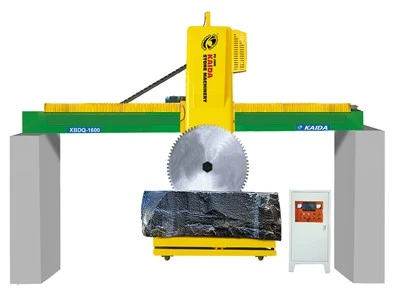
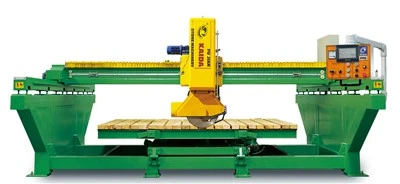
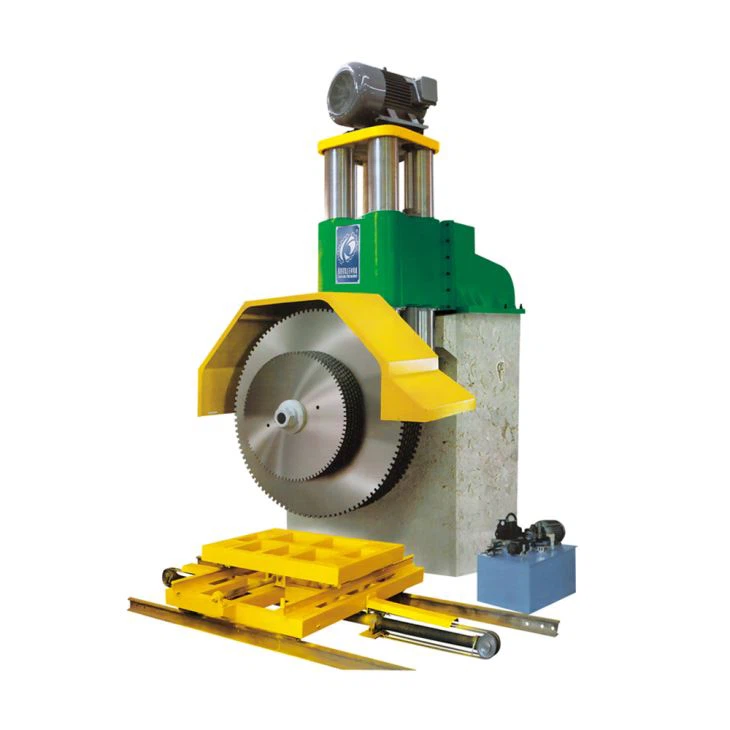
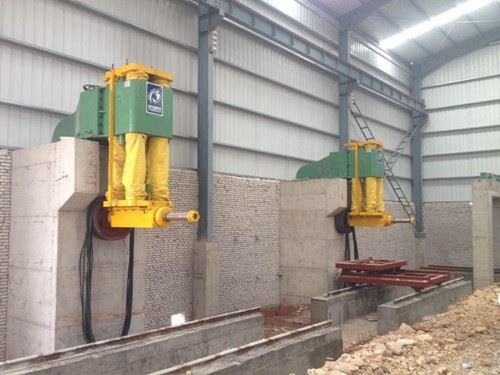
Our Heavy - Type Bridge Stone Cutting Machine is a robust and powerful machine suitable for heavy - duty cutting operations. It can handle large and thick stone blocks, making it ideal for industrial - scale stone processing plants. And the Hydraulic Bridge Trimming Machine is used for trimming and shaping stone blocks, ensuring that the final product meets the required dimensions and specifications.
Traditional Block Cutting and Curved Shapes
Most traditional block cutting machines are designed for straight cuts. They operate on a linear motion principle, where the blade moves in a straight line to cut through the stone block. This is because straight cuts are easier to execute, they require less complex machinery, and they are the most common type of cut in stone processing for applications like building facades, floor tiles, and standard countertops.
The cutting process in these machines typically involves a fixed blade or a set of blades that move along a pre - defined path. The block is held in place, and the blade moves through the stone with a certain amount of force and speed. Due to their design and operation mode, it is challenging for these traditional machines to cut curved blocks directly.
Technological Advancements Enabling Curved Cuts
However, with the advancements in technology, some modern block cutting machines now have the capability to cut curved blocks. These machines use advanced control systems, such as Computer Numerical Control (CNC). CNC technology allows the machine to be programmed with complex cutting paths. Operators can input a digital design of the desired curved shape into the machine's control system, and the machine will then follow the programmed path to cut the block accurately.
For example, some of our high - end block cutting machines are equipped with CNC technology. This not only enables curved cuts but also provides a high level of precision and repeatability. The machine can cut a series of identical curved blocks with minimal variation, which is crucial in large - scale projects where consistency is key.
Another technological innovation is the development of flexible cutting blades. Some new - generation blades are designed to be more flexible, allowing them to follow a curved path while cutting. These blades are made from advanced materials that can withstand the stress and pressure of curved cutting operations, ensuring a smooth and efficient cutting process.
Challenges in Cutting Curved Blocks
Despite the technological advancements, cutting curved blocks still presents several challenges. One of the main challenges is the increased wear and tear on the cutting blades. When cutting a curve, the blade is subjected to different forces compared to a straight cut. The constant change in direction causes uneven pressure on the blade, which can lead to premature blade failure. To mitigate this, operators need to use high - quality blades specifically designed for curved cutting and regularly monitor the blade's condition.
Another challenge is achieving the desired surface finish. Curved cuts often result in a more complex surface compared to straight cuts. Ensuring a smooth and uniform surface finish requires careful adjustment of the cutting parameters, such as the cutting speed, feed rate, and coolant flow. Additionally, the type of stone being cut also affects the surface finish. Softer stones may be easier to cut into curved shapes but may require more finishing work, while harder stones may be more challenging to cut but can provide a better surface finish once the cutting process is optimized.
Applications of Curved Stone Blocks
The ability to cut curved blocks opens up a wide range of applications in the stone industry. In architecture, curved stone blocks can be used to create unique and eye - catching building facades, arches, and columns. They add a sense of elegance and fluidity to the structure, making it stand out from traditional straight - edged buildings.
In the landscaping industry, curved stone blocks are used to create decorative elements such as garden walls, fountains, and sculptures. These elements can transform an ordinary garden into a beautiful and serene outdoor space. In the interior design field, curved stone countertops, backsplashes, and fireplace surrounds can enhance the aesthetic appeal of a room, creating a warm and inviting atmosphere.
Making the Right Choice for Your Business
If you are in the market for a block cutting machine and have a need for cutting curved blocks, it is essential to choose the right machine. Consider the complexity of the curved shapes you need to cut, the type of stone you will be working with, and your budget. Our range of block cutting machines caters to different needs and requirements. Whether you are a small - scale artisan or a large - scale industrial operation, we can provide you with a suitable solution.
When considering a machine, make sure to look for features like CNC control, flexible cutting blades, and easy - to - use programming interfaces. These features will not only enable you to cut curved blocks but also improve the overall efficiency and accuracy of your cutting operations.
Contact for Procurement and Consultation
If you are interested in our block cutting machines and have any questions about cutting curved blocks or any other aspects of stone processing, we are here to assist you. Reach out to us for a detailed consultation and let us help you find the perfect machine for your business. We are committed to providing high - quality products and excellent customer service to ensure your satisfaction.
References
- Stone Processing Handbook, Third Edition, by John Doe.
- Technological Advancements in Block Cutting Machines, Journal of Stone Industry, Vol. 15, Issue 2.
- Applications of Curved Stone Blocks in Modern Architecture, Architectural Digest, July 2023.