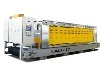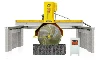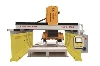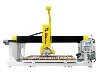
Choosing the right stone cutting machine is essential for achieving high cutting accuracy, stable production, and better material utilization. For stone processors, the best machine is not necessarily the most powerful or the most expensive one. The right choice should match the material, slab size, production volume, and processing requirements.

1. Consider the Type of Stone
Different materials require different cutting conditions. Granite is hard and abrasive, so it generally requires a rigid machine structure, suitable spindle power, and a high-quality diamond blade. Marble is comparatively softer but requires stable cutting to achieve smooth edges and minimize chipping. Quartz and engineered stone also require appropriate blades, cutting speeds, and cooling systems.
2. Check Slab Thickness and Cutting Size
Before purchasing a machine, determine the maximum slab thickness and cutting dimensions you handle. The machine should provide sufficient cutting depth, working length, and table size for your largest products. Choosing a machine with inadequate capacity can limit production, while excessive capacity may increase your investment unnecessarily.
3. Match the Machine to Your Production Volume
Small workshops may benefit from a reliable semi-automatic machine with flexible operation. Medium and large stone factories may prefer CNC or highly automated cutting equipment to improve productivity and reduce labor requirements. For continuous production, stability, positioning accuracy, and automation are often more important than maximum cutting speed alone.
4. Compare Key Specifications
When comparing stone cutting machines, pay attention to maximum cutting diameter, cutting thickness, spindle power, cutting length, table dimensions, positioning accuracy, and automation functions. It is also important to evaluate machine structure, control systems, cooling, and overall reliability.
5. Avoid Choosing Based Only on Price
A low initial price does not always mean a lower total cost. Machine durability, blade consumption, maintenance requirements, energy efficiency, cutting accuracy, and after-sales service can significantly affect long-term operating costs.
Conclusion
The right stone cutting machine should be selected according to your actual materials, product dimensions, production volume, and future business needs. At KAIDA STONE MACHINERY, we focus on providing practical and reliable stone processing solutions for customers worldwide. By sharing your stone type, slab size, thickness, and production requirements, you can receive a more suitable machine recommendation for your application.