In stone processing, material waste is not always caused by the cutting machine itself. The cutting layout, slab dimensions, product specifications, and cutting sequence can all affect how efficiently a piece of stone is used.
For marble and granite processors, especially those handling large slabs and high-value materials, a well-planned cutting layout can help increase material utilization and reduce unnecessary offcuts. The goal is not simply to make more cuts-it is to arrange the required pieces in a practical way before production begins.
Start With Accurate Slab Measurements
Before creating a cutting layout, the actual dimensions of each slab should be checked. Natural stone slabs may have differences in length, width, thickness, edges, or surface condition. A layout based only on nominal dimensions may result in unusable sections or unexpected losses during production.
Important information to record includes:
- Actual slab length and width
- Thickness and edge conditions
- Natural cracks or defects
- Required finished dimensions
- Number of pieces required

Consider the Final Product Dimensions
The cutting layout should begin with the finished products rather than the machine. For example, a project may require several countertop pieces, steps, wall panels, or other stone components with different dimensions. Arranging these requirements together can make it easier to identify how they can be positioned on the same slab.
When several pieces can be arranged efficiently, the remaining material may also be large enough for smaller products instead of becoming unusable waste.
Allow for Cutting Width
The width of the saw blade cut (kerf) is another factor that should be considered during layout planning. Every cutting operation removes a small amount of material. When multiple cuts are made across a slab, the total loss can become significant.
Therefore, the cutting plan should leave sufficient space between individual pieces while avoiding unnecessarily large gaps. The exact allowance depends on the cutting equipment, blade specification, stone material, and production requirements.

Arrange Cutting Sequences Carefully
Cutting order can affect both efficiency and material utilization. A practical sequence should consider the position of each required piece and how the remaining slab will be handled after every cut. In some production situations, cutting the larger or more important pieces first can make subsequent operations easier to organize.
For complex projects, operators can prepare a cutting diagram before production begins. This allows potential problems to be identified before the slab reaches the machine.
Match the Layout With the Cutting Machine
Different machines provide different processing capabilities:
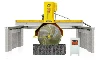
- Block Cutting Machines: Generally used to divide large stone blocks into slabs or smaller sections.
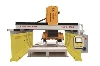
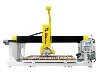
- Bridge Cutting Machines: Commonly used for precise cutting of slabs and customized stone components.
- Profiling & Edge Equipment: Required for factories processing complex shapes or specialized edge profiles.
A cutting layout should therefore take the machine's working range, blade configuration, cutting direction, and production requirements into account.
Reduce Waste Without Compromising Quality
Material utilization should not be considered separately from product quality. Trying to use every small section of a slab may create problems if the remaining material contains cracks, color differences, or other natural characteristics that make it unsuitable for the final application.
For high-value marble and granite, visual consistency can also be important. A slightly higher material yield may not be beneficial if it results in unsuitable pieces being used in a visible project area. The practical objective is to achieve a reasonable balance between material utilization, production efficiency, and finished-product quality.
Use Cutting Plans for Repeated Production
For factories producing repeated sizes, standard cutting layouts can save preparation time. Once a proven layout has been tested, it can be recorded and adjusted for different slab dimensions or product specifications. This creates a more consistent production process and makes it easier for operators to prepare future orders. For project-based production, the layout can be prepared according to the specific stone quantity and product schedule.
KAIDA STONE MACHINERY for Stone Processing
KAIDA STONE MACHINERY has more than 20 years of experience in stone cutting machinery manufacturing and supplies equipment including bridge cutting machines, block cutting machines, and profile cutting machines.
Its equipment is designed for stone processing applications involving materials such as marble and granite, including large-size and high-value stone products.
KAIDA's engineering team can evaluate customer requirements and prepare customized system proposals based on factors such as factory space and operator conditions. Machine programming, operation training, and maintenance support are also available as part of its service.

Final Considerations
A good stone cutting layout starts before the machine begins cutting. Accurate slab measurements, finished product dimensions, cutting allowances, machine capabilities, and cutting sequence all need to be considered together.
For stone processing factories, better layout planning can help make more effective use of valuable marble and granite while reducing unnecessary offcuts. Combined with suitable stone cutting machinery and consistent production procedures, a practical cutting layout can contribute to more efficient and controlled stone processing.