The Environmental Footprint of Stone Polishing: Challenges & Technological Solutions
As a dedicated supplier in the stone processing industry, we recognize that modern manufacturing must go hand-in-hand with environmental stewardship. Polishing machines are essential for achieving the high-gloss finishes required for granite and marble, but understanding their ecological impact is crucial for sustainable development. This article explores the environmental implications of stone polishing and the technological advancements designed to mitigate them.
Mechanisms of Impact: Dust and Particulate Matter
Polishing is fundamentally a subtractive manufacturing process. By utilizing abrasive materials-such as diamond segments or pads-machines grind down stone surfaces to achieve smoothness and reflectivity. This mechanical friction inevitably generates particulate matter.
The primary environmental concern is the generation of respirable crystalline silica dust. If left unmanaged, these fine particles can become airborne, posing significant risks not only to air quality but also to the respiratory health of operators and surrounding communities. Effective containment is not just a regulatory requirement; it is a moral imperative.
Water Usage and Effluent Management
Wet polishing is the industry standard for controlling dust and cooling the abrasive tools. However, this process creates a slurry-a mixture of water and fine stone particles. If this wastewater is discharged without treatment, it can lead to sedimentation in local water bodies and potential contamination of aquatic ecosystems. Proper management of this "process water" is critical to preventing soil and water pollution.


Energy Consumption and Carbon Footprint
Industrial polishing machines are energy-intensive assets. The electric motors driving the polishing heads require significant power to overcome the friction of stone processing. In regions where the grid relies on fossil fuels, high energy consumption directly correlates to higher greenhouse gas emissions. Consequently, energy efficiency is no longer just a cost-saving metric-it is a key indicator of a machine's environmental sustainability.
The Sustainability Paradox: Refinishing vs. Quarrying
It is important to acknowledge the positive environmental role of polishing machinery. By enabling the restoration and refinishing of existing stone surfaces, these machines extend the lifecycle of architectural materials. This reduces the demand for virgin stone extraction (quarrying), a process that is notoriously destructive to landscapes and biodiversity. Therefore, efficient polishing technology actively contributes to the conservation of natural resources.
Technological Mitigation Strategies
As suppliers, we are actively engineering solutions to minimize the ecological footprint of our machinery. Here is how modern design is addressing these challenges:
Advanced Dust Suppression and Collection
Modern machinery is increasingly equipped with integrated dust management systems. We utilize high-efficiency vacuum ports and filtration units designed to capture particulate matter at the source. By trapping dust immediately upon generation, we significantly reduce airborne pollution and improve occupational health and safety standards.
Closed-Loop Water Recycling
To address water scarcity and pollution, we are transitioning towards systems compatible with closed-loop water recycling. Instead of single-use water flow, these systems filter and treat the slurry, separating the solids from the liquid. The clean water is then recirculated back into the machine, drastically reducing fresh water consumption and eliminating hazardous runoff.
High-Efficiency Drive Systems
We are integrating advanced motor technologies to optimize energy usage. Features such as Variable Frequency Drives (VFD) allow the machine to adjust motor speed and torque based on the specific resistance of the stone. This ensures that the machine draws only the power necessary for the task, minimizing energy waste.
Our Sustainable Product Portfolio
We offer a range of machinery designed with efficiency and environmental responsibility in mind:
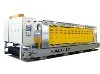
For large-scale operations, our High Efficiency Automatic Granite Polishing Machine sets the standard. It combines high-volume output with optimized energy consumption and superior dust control mechanisms.
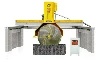
For specialized applications, the Best Marble Polishing Machine is engineered to handle the delicate nature of marble. It ensures a pristine finish while minimizing material waste and energy usage.
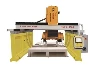
For versatility across various stone types, our standard Stone Polisher offers a robust, user-friendly solution that balances performance with operational efficiency.
Conclusion
While stone polishing presents environmental challenges, the industry is rapidly evolving to meet them. Through the adoption of energy-efficient motors, advanced filtration, and water recycling technologies, we can significantly mitigate negative impacts. As your supplier, we are committed to providing technology that allows you to achieve superior surface finishes without compromising the health of our planet.
We invite you to contact us to discuss how our eco-conscious machinery can align with your production goals and sustainability standards.
References
- Environmental Protection Agency (EPA). "Industrial Air Pollution Control and Silica Dust Management."
- International Labour Organization (ILO). "Occupational Safety and Health in the Stone Processing Industry."
- Global Stone Industry Research. "Sustainability Trends in Natural Stone Fabrication."