Not long ago, many stone factories were built around large-volume production. A single project could keep one production line busy for weeks, processing the same material in the same dimensions with only minor adjustments.
Today, the picture is different.
Processors serving overseas markets are receiving a wider variety of orders. Alongside large commercial projects, there are more requests for boutique hotels, private residences, renovation work, and custom architectural features. These projects often require smaller quantities, mixed materials, and tighter delivery schedules.
For production managers, this change affects more than the order book. It changes how the factory operates every day.

Shorter Production Runs Require Faster Changeovers
Running the same cutting program for hundreds of identical slabs is relatively straightforward. Switching between different materials, dimensions, or edge details several times a day is another matter.
Each change may involve replacing tools, adjusting machine parameters, moving materials, or confirming new drawings. Even when these tasks take only a short time, they gradually reduce productive machine hours.
For this reason, many factories are paying closer attention to reducing setup time rather than simply increasing cutting speed.

Production Planning Has Become More Flexible
Smaller orders also make production scheduling more complex.
Instead of organizing work by customer alone, many factories now group jobs according to stone type, slab thickness, or processing method. This helps reduce unnecessary machine adjustments and material handling.
Although these changes happen behind the scenes, they often improve workflow more effectively than adding another machine to the workshop.

Digital Drawings Are Reaching the Workshop Earlier
Another noticeable change is the way production information moves through the factory.
Architects, fabricators, and project managers increasingly provide digital files before stone arrives at the workshop. Operators can review dimensions, machining requirements, and cutting sequences in advance, allowing production teams to prepare materials and schedules before processing begins.
This reduces uncertainty, particularly when several customized projects are running at the same time.
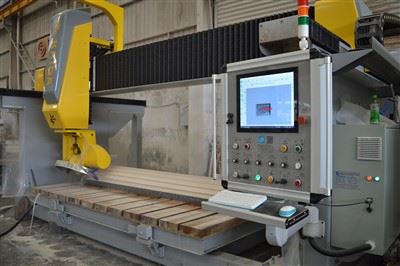
Equipment Needs to Adapt to Different Jobs
A machine that performs well in one production environment may not be the best choice for another.
Factories handling frequent product changes often value stable positioning, straightforward programming, and repeatable accuracy more than maximum cutting speed alone.
The goal is to complete different jobs with fewer interruptions while maintaining consistent quality across every order.

Experience Still Makes the Difference
Although production methods continue to evolve, experienced operators remain an important part of the process.
Natural stone is never completely uniform. Veining, hardness, and internal structure vary from one block to another, and production decisions often rely on practical judgement that cannot be replaced by software alone.
Technology supports these decisions, but experience continues to guide them.
KAIDA's Perspective
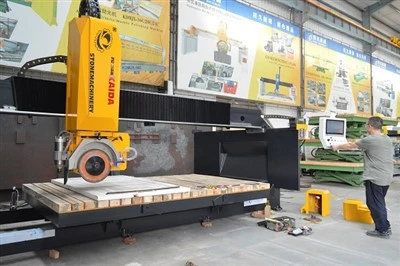
Located in Shuitou, one of China's major stone industry centers, Fujian Kaida Stone Machinery has worked with stone processors serving different markets and production models.
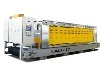
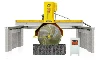
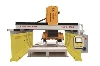
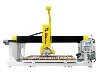
Over the years, the company has seen customer requirements gradually shift from maximizing output alone to balancing efficiency, flexibility, and consistent quality. This experience continues to influence the development of its bridge cutting machines, CNC equipment, block cutting machines, and other stone processing solutions.

Looking Ahead
The trend toward smaller production batches is unlikely to replace large-scale manufacturing, but it is becoming an increasingly important part of the global stone business.
Factories that can move efficiently between different projects without sacrificing quality will be better positioned to respond to changing market demands. In many cases, success will depend not only on the machines installed in the workshop, but also on how production is organized around them.