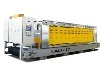
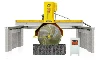
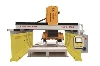
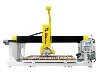
In the stone industry, every piece of raw material has value.
A granite block or marble slab represents the result of quarrying, transportation, and preparation before it reaches the processing factory. Once cutting begins, every unnecessary adjustment, incorrect dimension, or damaged section can reduce the usable value of that material.
For this reason, cutting accuracy has become an increasingly important consideration for stone processors around the world.

Material Loss Often Starts During the First Cutting Stage
When people discuss stone waste, attention is often focused on leftover pieces after fabrication. However, material loss can begin much earlier.
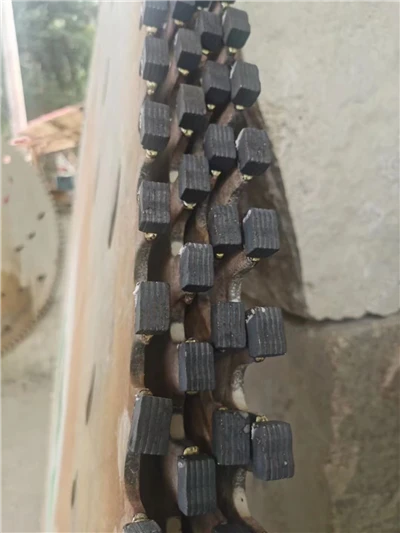
During block cutting and slab processing, inaccurate positioning or unstable cutting conditions may create problems such as uneven dimensions, additional trimming requirements, or sections that cannot be used for the intended application.
For factories processing expensive marble varieties or large granite blocks, these small losses can accumulate over time.
Precision Affects More Than Final Appearance
Cutting accuracy is not only related to the appearance of finished stone products.
In many projects, stone components need to fit precisely with other materials, especially in applications such as:
- Building facades
- Hotel interiors
- Large flooring projects
- Custom countertops
- Decorative wall installations
When dimensions are inconsistent, additional processing may be required before installation. This increases labor time and can affect project schedules.

Stable Equipment Helps Maintain Consistent Results
Stone is a natural material with different characteristics from one block to another. Even experienced operators need reliable equipment to achieve consistent results.
Factors such as machine structure, guide system stability, blade movement control, and regular maintenance all influence cutting performance.
A machine that performs consistently during long production periods allows factories to plan their workflow more effectively and reduce unnecessary reprocessing.

Reducing Waste Requires Cooperation Between Equipment and Operators
Although machine accuracy is important, it is only one part of the production process.
Experienced operators still play an important role in evaluating stone conditions, selecting suitable cutting methods, and making adjustments according to different materials.
The best production results usually come from combining reliable equipment with practical operating experience.

Accuracy Becomes More Important as Orders Become More Customized
The stone market has gradually moved beyond standard products.
Many factories now handle more customized orders, including special dimensions, unique patterns, and project-specific requirements. These jobs leave less room for cutting errors because each piece is often produced for a specific location.
As customization increases, stable cutting accuracy becomes a basic requirement rather than an additional advantage.

KAIDA's Focus on Reliable Stone Processing Equipment
Based in Shuitou, Fujian, Fujian Kaida Stone Machinery has more than 20 years of experience in stone machinery manufacturing.
The company develops and supplies equipment including bridge cutting machines, block cutting machines, profile machines, and other stone processing solutions designed for different production environments.
Through continuous improvement of machine structures and processing systems, KAIDA focuses on helping stone processors achieve stable operation, accurate cutting, and efficient material utilization.

Improving Efficiency Starts with Using Materials Wisely
For modern stone factories, increasing production output is not only about processing more materials. It is also about making better use of every block and slab entering the workshop.
As raw material costs and project requirements continue to change, accurate and reliable cutting will remain an important factor influencing the competitiveness of stone manufacturers.