When a natural stone facade panel cracks around a fixing point or a section of cladding comes loose, the first questions usually concern the anchors, the installation and the structural design. These are essential parts of the investigation. But the condition of the stone panel itself also deserves attention.
Panel thickness, cutting geometry, edge condition and material defects all influence how a piece of stone behaves after installation. Problems can begin well before the panel reaches the construction site. As noted by focuspiedra - Antonio Tello, Ingepiedra: "Requiring specialized and even independent technical management for the facade would prevent many accidents."
For stone processors, this creates a practical responsibility: manufacture each panel according to the approved drawings, inspect the features that matter and identify defects before the material leaves the workshop. Processing machinery plays an important role in this process, although it cannot replace facade engineering or proper installation supervision.
1. A Stone Facade Is an Engineered System, Not Just a Decorative Surface
Natural stone brings distinctive colors, textures and long-term durability to building facades. However, once stone panels are attached to a building, their performance depends on more than the stone's appearance.
A facade assembly typically involves the stone panels, fixing hardware, supporting structure, joints and installation details. These components must work together under the loads and environmental conditions expected for the building.
Wind pressure and suction, the weight of the panels, temperature changes, moisture exposure and movement between materials can all affect the assembly. The design must account for these conditions, while fabrication must follow the resulting technical requirements.
This is particularly important for thin cladding panels. A panel that looks substantial may have limited material around a fixing point or a narrow section between an opening and an edge. If its dimensions or fixing details differ from the approved design, the behavior of the finished assembly may also change.
Panel thickness, fixing positions, edge distances and joint dimensions should therefore be established by the project's qualified facade engineer. There is no single thickness or fixing detail that can be applied safely to every stone type, panel size and building.
2. Fixing Areas Deserve Particular Attention During Fabrication
Anchors transfer loads through relatively small contact areas. Depending on the system, these may involve holes, kerfs, undercut recesses or other specially prepared features.
The stone surrounding these areas must remain suitable for the intended connection. Existing fissures, chipped edges, damaged corners or incorrectly formed fixing features can reduce the reliability of the finished component.
Not every failure originates in the stone, and not every processing defect leads to a structural problem. Anchor selection, corrosion protection, substrate conditions, installation quality and engineering calculations remain equally important parts of the investigation.
Nevertheless, workshop inspection can identify issues before installation makes them harder to detect. For each panel, the fabricator should check the locations and geometry of the specified fixing features against the approved shop drawings.
If an unexpected crack or defect appears in a critical area, the correct response is to stop and request a technical review rather than conceal the damage during finishing.
3. Accurate Cutting Helps Turn Drawings into Repeatable Components
Architectural projects often require multiple panels to share consistent dimensions, edge details and joint lines. Even when individual cutting errors appear small, repeated deviations can create alignment problems across a larger facade.
Different stages of production call for specialized equipment:
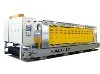
- Block cutting machines: Prepare stone blocks into slabs for subsequent processing, providing a reliable starting point for downstream fabrication. Explore our heavy-duty block cutting machines.
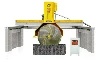
- Bridge saw machines: Support dimensioned cutting, straight cuts and chamfering when panels must match precise dimensions. View our efficient bridge saw machines.
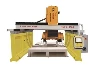
- Multi-axis CNC cutting machines: Handle complex geometries and angled cuts when machine configuration and tooling are optimal. Discover advanced multi-axis CNC cutting machines.
4. Five Workshop Checks Before Stone Panels Leave the Factory
A practical inspection process connects the approved design with the actual panel being produced. The following checks provide a useful standard for architectural stone fabrication:
| Checkpoint | What to Verify | Why It Matters |
|---|---|---|
| Approved drawings | Confirm panel dimensions, thickness, orientation, edge details and fixing specifications against current drawing revisions. | Prevents production from relying on outdated or incomplete information. |
| Incoming material | Identify stone type and batch; inspect visible fissures, cracks, chipped areas and other defects relevant to application. | Helps identify material issues before they become part of a finished panel. |
| First-piece inspection | Measure first completed panel for dimensions, thickness, squareness, cut quality and specified surface finish. | Allows processing settings to be reviewed before batch production continues. |
| Critical fixing features | Check specified holes, kerfs or recesses against approved geometry and designated fixing system requirements. | Helps prevent incorrect locations or damaged fixing areas from passing into assembly. |
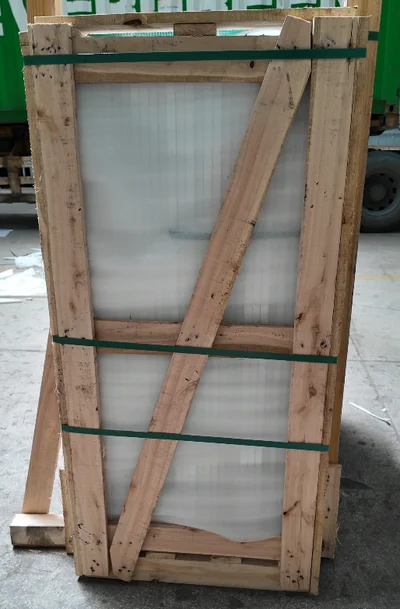
| Identification and packing | Match panel identification to drawings and installation sequence; protect edges and corners during handling and transport. | Reduces mix-ups and avoidable damage between workshop and site. |
5. Defects Should Be Resolved Before Installation, Not Hidden During It
Problems discovered during installation can lead to rework, delivery delays and pressure to make unapproved changes. A panel with the wrong dimensions may appear easy to correct on site, but modifying a critical edge or fixing feature without technical approval can introduce severe risks.
A clear process is more reliable:
- Record the discrepancy and identify the affected panel.
- Compare the actual component with the latest approved drawing.
- Ask the responsible technical team to determine whether the panel can be accepted, reprocessed or must be replaced.
- Document any approved change and ensure that the workshop and installation team use the same revision.
6. Where Stone Processing Machinery Fits into the Quality Chain
Stone processing machinery helps workshops produce components to defined dimensions and repeat production operations with greater control. The benefits depend on selecting equipment for the actual material, panel size, geometry and workload.
At KAIDA STONE MACHINERY, our equipment range includes bridge saws, block cutting machines and multi-axis CNC stone cutting machines designed to meet diverse architectural requirements.
Reliability Begins Before the First Panel Is Installed
A reliable stone facade depends on connected decisions: suitable material selection, sound engineering, controlled fabrication, documented inspection and competent installation. Start with approved drawings, use a suitable production process, inspect critical details and resolve deviations before dispatch.