STONE PROCESSING KNOWLEDGE
Personalized memorials are creating new opportunities for stone workshops. Digital design, CNC machining and traditional craftsmanship can work together to produce more distinctive stone carvings and reliefs.
Memorial stone production has traditionally relied on engraved inscriptions, applied photographs and familiar decorative motifs. Today, customers are increasingly interested in designs that reflect individual stories, personal preferences and distinctive visual details.
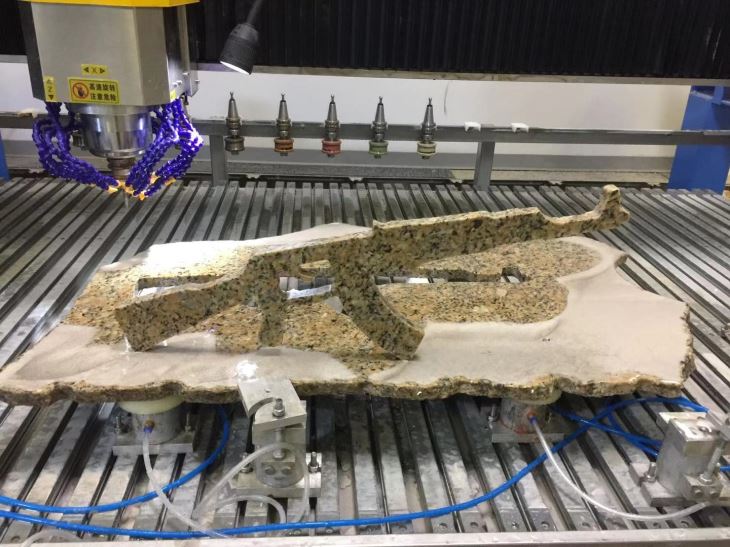
An industry interview published by Focus Piedra highlights a notable development in funerary art: the transition from two-dimensional images toward three-dimensional reliefs. The process described involves converting an image into a digital file, preparing it for CNC machining and adjusting the relief thickness to suit the intended result. Skilled artisans can then contribute the finishing touches where necessary.
For stone processors, this development points to an important opportunity. Digital machining can extend the range of customized stone products, but successful production still depends on material selection, appropriate equipment, toolpath preparation and careful finishing.
Key takeaway
The shift toward personalized stone reliefs is not simply a design trend. It also changes how workshops plan digital files, select machining equipment and organize the production process.
1. Why Personalized Stone Reliefs Are Gaining Attention
Standardized products remain important in memorial stone production, but customized work allows manufacturers to offer more individual designs. Portraits, religious symbols, lettering, decorative patterns and other meaningful imagery can all influence the shape and appearance of a finished memorial.
Three-dimensional reliefs add another dimension to this process. Rather than reproducing an image only on a flat surface, a relief uses differences in surface height to create visible depth, contours and shadows.
- Greater visual depth: Raised and recessed areas can make selected features more prominent than a flat engraved image.
- More design flexibility: Digital models can be adjusted before machining, allowing the workshop to review proportions and relief depth.
- A wider product range: The same general production approach can support different patterns, portraits, symbols and decorative stone components, subject to the machine's capabilities.
- A combination of technology and craftsmanship: CNC machining can perform programmed operations, while manual finishing can address details that require an artisan's judgment.
For stone workshops, the commercial value lies in matching these possibilities with actual customer demand. A machine investment should be based on the relief styles, stone materials, product dimensions and order volumes the business expects to handle.
2. How a Digital Image Becomes a Stone Relief
Producing a three-dimensional stone relief involves more than transferring a photograph directly to a machine. The image must be translated into usable machining information, and the resulting toolpaths must be suitable for the selected material and equipment.
STEP 1 - Prepare the Image
Select the reference image and determine which features need to remain recognizable in the finished stone. Image quality and contrast can influence the preparation process.
STEP 2 - Build the Digital Relief Model
Convert the image or design into a suitable digital model. Define the relief height, depth transitions, overall dimensions and important surface details.
STEP 3 - Generate and Check the Toolpath
Prepare machining instructions according to the equipment, cutting tools, material and required surface detail. Check clearances and the machining sequence before production.
STEP 4 - Machine the Stone
Secure the workpiece and carry out the programmed machining operations using a suitable machine configuration and cutting tools.
STEP 5 - Inspect and Finish
Inspect the relief details, edges and overall appearance. Carry out any required hand finishing, cleaning and final quality checks.
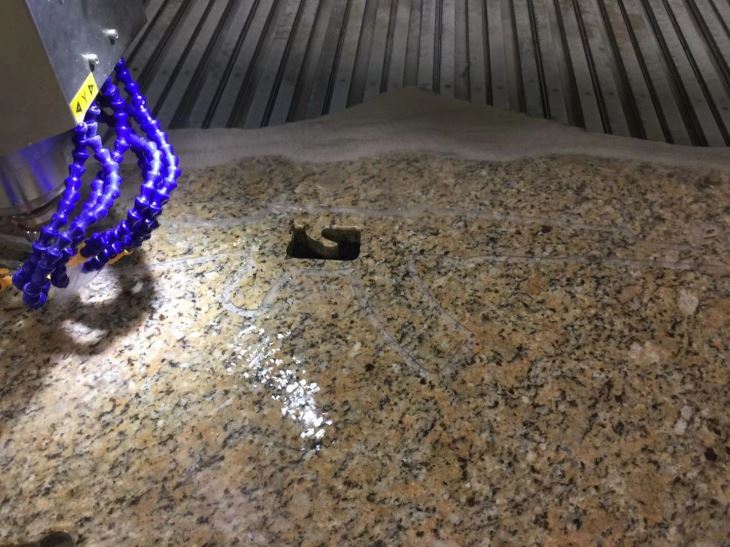
Each stage affects the final result. A detailed digital model cannot compensate for unsuitable tooling, and capable machinery cannot automatically correct a poorly prepared file. Consistent results depend on the complete workflow rather than on a single piece of equipment.
3. Choosing Stone Machinery for Relief and Artistic Processing
Not every stone cutting machine is designed for the same machining tasks. Straight cutting, profile processing and complex three-dimensional carving involve different movement requirements and toolpath capabilities.
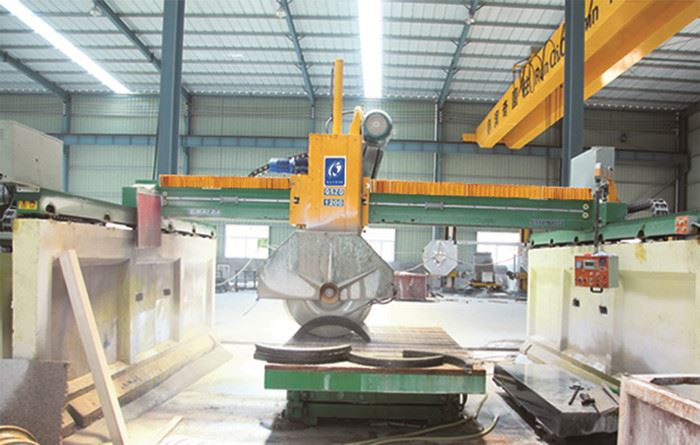
Bridge Cutting Machines: Preparing Stone Blanks
Before a memorial panel or decorative component can be carved, the raw stone may need to be cut to the required dimensions. A bridge cutting machine is suitable for many straight-cutting and slab-sizing operations, depending on the model and configuration.
For workshops processing marble or granite slabs, accurate blank preparation helps establish the dimensions of the workpiece before subsequent engraving or carving. The machine should be selected according to the stone thickness, cutting dimensions and required production workflow.
Explore KAIDA Bridge Cutting Machines →
CNC Profiling and Carving Machines: Creating Contours
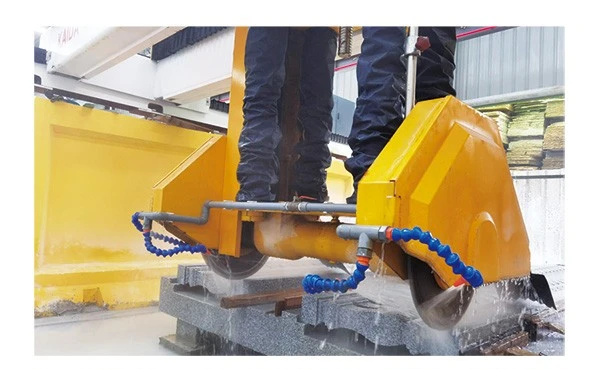
When a product requires shaped edges, decorative profiles or carved contours, a suitable CNC profiling and carving machine may provide a more appropriate solution than equipment intended mainly for straight cutting.
The key selection factors include the required machining axes, tool movement, workpiece dimensions, stone type and complexity of the design. Buyers should confirm whether the intended machine can perform the actual relief or carving operation required, rather than relying on the general label of CNC equipment.
KAIDA offers a range of stone profiling and carving equipment for different stone-processing requirements. Review the machine's documented functions and confirm compatibility with your proposed workpieces before placing an order.
View KAIDA Stone Cutting and Processing Machines →
Multi-Axis CNC Machines: For More Complex Geometries
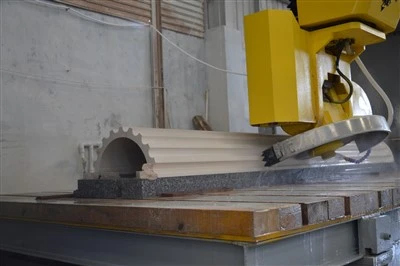
Three-dimensional reliefs and complex artistic stonework may require tool access from different directions. Depending on the design, multi-axis CNC equipment can help process contours and surfaces that are difficult to produce with basic straight-cutting equipment.
However, the number of axes alone does not determine whether a machine can produce a particular relief. The effective machining range, rotary-axis movement, spindle or cutting-head configuration, tool compatibility and software workflow must all be considered.
Before selecting a machine for portrait reliefs, memorial carvings or sculptural stonework, provide the supplier with sample drawings or 3D models. Ask the supplier to confirm the required machining functions and whether a representative sample can be evaluated.
Discuss Your Stone Machining Requirements with KAIDA →
4. Material Selection and Relief Quality
The stone itself plays an important role in the appearance and manufacturability of a relief. Marble and granite differ in mineral composition, grain structure, hardness and fracture behavior. Even within the same material category, individual varieties may respond differently to cutting and carving.
Before production, consider the following factors:
Material Structure
Inspect visible veins, mineral inclusions, cracks and other natural features that may affect small raised details or narrow sections.
Relief Depth and Detail
The depth difference between raised and recessed areas should be appropriate for the material, design and available cutting tools.
Workpiece Thickness
Ensure that the blank provides sufficient material for the planned relief and remains suitable for secure clamping throughout machining.
Surface Finishing
Different areas may require different finishing methods. Deep recesses, fine contours and broad raised surfaces should be evaluated separately.
For a new relief design, a small trial piece can help assess how the selected stone responds to the machining process. This is particularly useful when the finished product contains fine facial features, narrow edges or transitions between multiple relief depths.
5. Balancing Digital Production and Skilled Craftsmanship
CNC machining and traditional stone craftsmanship are not mutually exclusive. Digital equipment can execute programmed movements and repeat defined operations, while experienced craftspeople can evaluate the appearance of the finished surface and refine details where necessary.
For customized memorial products, a practical production approach may include:
- Using digital models to review the composition and relief dimensions before machining.
- Selecting cutting tools and machining strategies according to the stone and the required level of detail.
- Using trial machining to identify potential problems before processing the final workpiece.
- Inspecting the result and completing any necessary manual finishing.
- Recording suitable machining parameters so that repeat orders can follow a more consistent process.
The appropriate balance depends on the product. Some designs may be produced mainly through programmed machining, while others require more manual work to achieve the intended artistic result.
6. What Stone Workshops Should Check Before Buying CNC Equipment
For stone processors considering a move into relief carving or customized artistic products, the purchasing decision should begin with actual production requirements rather than a machine's headline specifications.
- Define the target products. Specify whether the workshop intends to produce shallow reliefs, portrait carvings, decorative profiles, lettering or more complex three-dimensional components.
- Confirm material compatibility. Identify the stone varieties, workpiece dimensions and thicknesses to be processed.
- Check machining functions. Confirm the axes, tool movements and cutting or carving functions required for the proposed designs.
- Review software requirements. Establish which digital file formats, CAM tools and operating skills are needed to prepare and execute machining jobs.
- Evaluate sample processing. Where possible, provide a representative design and request a discussion of the machining process, tooling and expected finish.
- Plan maintenance and training. Ask about operator training, routine maintenance, spare parts and technical support.
These checks help buyers distinguish between equipment that can prepare stone blanks, equipment intended for profiling, and CNC systems designed for more demanding machining operations.
Conclusion: Turning Customized Designs into Practical Production
The growing interest in personalized memorials illustrates a wider development in the stone industry: customers are looking for products that offer more individual expression, while processors need practical ways to manufacture different designs.
Moving from a flat image to a three-dimensional relief requires a coordinated workflow involving digital modeling, machining preparation, suitable equipment, material knowledge and final inspection. CNC technology can expand what a workshop is able to produce, but the choice of machine must match the actual machining task.
For stone manufacturers, the best starting point is to identify the products they want to make, evaluate representative designs and select equipment according to documented capabilities. A well-planned production process can help turn customized stonework from an occasional special order into a more structured part of the business.
Looking for Stone Processing Machinery?
KAIDA STONE MACHINERY supplies stone cutting and processing equipment for different production requirements. Share your material, workpiece dimensions and target products with our team to discuss suitable machine options.
Related topics: CNC stone carving, three-dimensional stone reliefs, memorial stone processing, stone profiling machines, stone cutting equipment.
Editorial note: Machine suitability for specific relief designs should be confirmed against the machine's actual configuration, tooling and software capabilities.